A cybersecurity tabletop exercise matters because it lets leaders and responders rehearse difficult incident decisions before facing them under real pressure. It exposes unclear authority, communication gaps and untested assumptions, then converts those findings into owned actions with due dates.
TableTop Sim supports this process through live injects, role-specific participant views, facilitator controls and web and PDF after-action reports produced on the day of the exercise.
Why cybersecurity tabletop exercises are important
Incident-response plans describe intended actions, but a tabletop exercise tests whether people can interpret and apply those plans together. The exercise creates a controlled setting where executives, legal advisers, communications leaders and technical responders can work through the consequences of an unfolding event.
The aim is not to predict every detail of a future incident. It is to examine how the organization makes decisions when information is incomplete, time is limited and different teams have competing priorities.
A well-run exercise helps an organization:
- Clarify decision authority: Identify who can isolate systems, engage external advisers, approve public statements or accept operational risk.
- Test coordination: Check whether technical, legal, communications and executive teams share information effectively.
- Challenge assumptions: Discover dependencies on unavailable people, unverified contact lists or tools affected by the incident.
- Practice escalation: Determine what information leaders need and when an event should move from technical response to executive crisis management.
- Create improvement work: Record lessons, recommended alternatives, owners and due dates rather than ending with informal observations.
For a broader overview of the format, see cybersecurity tabletop exercises.
What a tabletop tests that a written plan cannot
A document can assign responsibilities, but it cannot show how those responsibilities interact under pressure. During an exercise, participants reveal how they understand their roles through the questions they ask, the decisions they defer and the evidence they require.
Decision-making with incomplete information
Real incidents rarely begin with a complete diagnosis. An early inject might indicate unusual account activity, while later injects introduce operational disruption, media attention or a demand from a threat actor.
The facilitator should require participants to make decisions using the information available at that point. This shows whether the team can distinguish facts from assumptions, state risk clearly and revisit earlier choices when conditions change.
Cross-functional communication
Cyber incidents are not handled by the security team alone. Legal considerations may shape evidence preservation and notifications, communications teams may need an approved holding statement, and executives may need to decide whether operational continuity outweighs containment risk.
Role-based participation makes these dependencies visible. In TableTop Sim, participants can join with a code without creating accounts or installing software, then enter a role-specific incident bridge as CEO, CISO, General Counsel, Communications Director, IT lead or observer.
Operational consequences
Technical actions have business effects. Disconnecting a system may contain an incident while interrupting customer service, internal operations or access to evidence.
A useful exercise asks participants to explain both the security rationale and the operational consequence of each major choice. That discussion gives leaders a more realistic understanding of incident-response trade-offs.
Plan usability
An exercise can reveal that a plan is difficult to use even when its content appears complete. Participants may struggle to locate escalation thresholds, identify an alternate decision-maker or determine which communication channel remains trusted.
These findings are valuable because they point to specific changes. The outcome might be a shorter decision checklist, an updated contact process or a clearer delegation rule rather than a broad recommendation to improve the plan.
Who should participate
Participation should follow the decision boundary being tested. A focused ransomware exercise might involve the CISO, IT lead, General Counsel, Communications Director and an executive with authority over operational disruption.
Common seats include:
- Executive leadership: Makes risk, continuity and resource decisions.
- Security leadership: Frames the threat, response options and residual risk.
- IT or operations: Assesses system dependencies and carries out technical actions.
- Legal counsel: Advises on legal obligations, privilege and evidence handling.
- Communications: Prepares internal, customer and media messaging.
- Observers: Capture lessons without directing the response.
Avoid inviting participants only because of seniority. Each person should own a decision, provide essential expertise or observe for a defined purpose.
How to run a tabletop that produces useful outcomes
The value of a tabletop depends more on focused facilitation than on scenario complexity. TableTop Sim exercises typically run for 60-120 minutes, so scope discipline is essential.
1. Scope one decision boundary
Define what the room must examine. Examples include whether to isolate a critical environment, how to coordinate an extortion response or when to approve external communications.
A narrow boundary produces deeper discussion than an attempt to test the entire incident-response plan. It also makes observations easier to convert into actions.
2. Choose and tailor the scenario
Select a scenario that creates the required decisions, then adapt it to the organisation's sector, technology stack and workforce model. TableTop Sim includes 12+ ready scenarios, and its AI environment tailoring can rewrite injects to match those operating conditions.
The scenario should be credible without becoming overloaded with technical detail. Facilitators can explore the scenario library when planning the exercise.
3. Brief the room and assign seats
Explain the scope, expected conduct and role of the facilitator. Make clear that the exercise evaluates plans and coordination, not individual performance.
Assign decision-making seats before the clock starts. Participants should know whether they are acting in their normal role or representing an absent function.
4. Run staged injects with a live clock
Release information in stages and require the room to respond before providing more detail. Ask what participants know, what they assume, what decision is required and who has authority to make it.
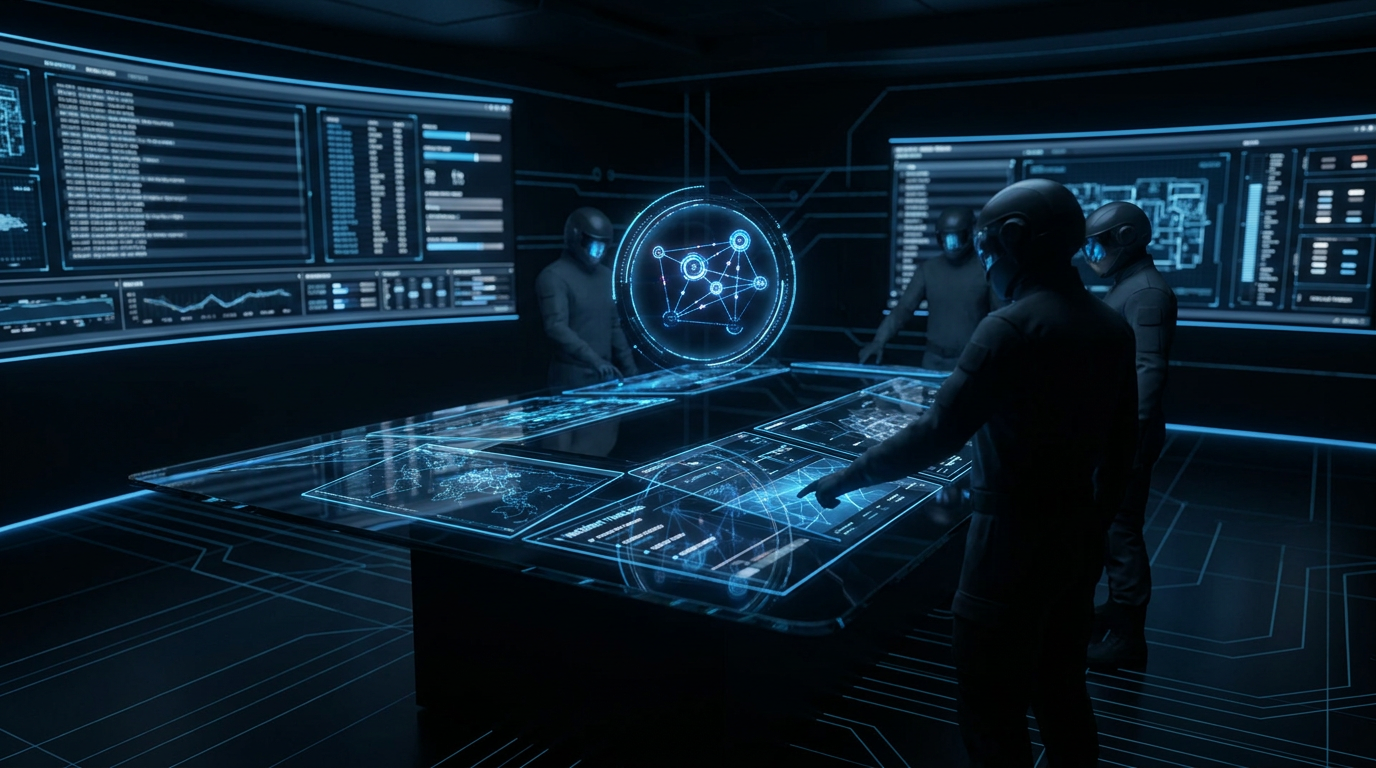
TableTop Sim gives the facilitator a mission-control console with an inject timeline, countdown control, response feed, private notes and pause controls. AI-improvised injects can also follow the direction of the room, depending on the plan.
5. Apply pressure without taking over
A facilitator should challenge vague answers rather than supply solutions. If someone says the team would notify leadership, ask who makes contact, by which channel, with what confirmed facts and within what timeframe.
Pressure can come from time constraints, conflicting priorities or new consequences. It should remain tied to the exercise objective rather than becoming surprise for its own sake.
6. Hold a hot wash and issue the report
Immediately after the scenario, ask what worked, what caused delay and what participants would change. Capture decisions, lessons learned, recommended alternatives and action owners with due dates.
TableTop Sim generates web and branded PDF after-action reports on the day. This helps move the exercise from discussion to a documented improvement cycle. For a complete preparation and delivery sequence, use the tabletop exercise walkthrough.
Common mistakes that reduce tabletop value
Some exercises create conversation but little operational improvement. Common causes include:
- Testing too much: A broad scenario prevents meaningful examination of any one decision.
- Reading slides: Participants become an audience instead of an active response team.
- Over-scripting: The facilitator follows planned injects even when the room exposes a more relevant issue.
- Skipping executives: Technical responders cannot test decisions that require business authority.
- Avoiding pressure: Easy agreement conceals escalation and coordination problems.
- Ending without owners: Findings remain observations instead of improvement work.
A tabletop is most useful when it produces evidence about how the team operates. The facilitator should record not only the final answer but also delays, disputed authority and information that participants could not obtain.
Tabletop exercises and regulatory expectations
Exercises can provide documented evidence that an organisation rehearses incident-response roles, decisions and coordination. They may also help teams examine policies or obligations relevant to their sector.
However, a tabletop exercise or TableTop Sim does not deliver regulatory compliance on its own. Organisations should map exercise objectives and resulting evidence to their own legal, contractual and regulatory requirements with appropriate advisers.
Frequently asked questions
How often should cybersecurity tabletop exercises be run?
The appropriate frequency depends on risk, organizational change and internal requirements. Internal security teams may run quarterly exercises, while additional sessions can follow major changes to systems, suppliers, leadership or response plans.
How long does a cybersecurity tabletop exercise take?
TableTop Sim exercises typically run for 60-120 minutes. The session should allow time for a briefing, staged injects, participant decisions and an immediate hot wash.
Is a tabletop exercise only for technical teams?
No. Cyber incidents require decisions from executives, legal counsel, communications staff, security leaders and IT or operations teams. The participant list should reflect the decision boundary being tested.
What should an after-action report contain?
It should document major decisions, lessons learned, recommended alternatives and improvement actions. Each action should have an owner and due date so progress can be reviewed after the exercise.
Do participants need TableTop Sim accounts?
No. Participants join with a code, require no account and install nothing. They enter a role-specific incident bridge while the facilitator manages the exercise from the control room.
Put the plan into practice
A cybersecurity tabletop exercise turns written plans into observable decisions and practical improvement work. Start a free trial of TableTop Sim at app.tabletopsim.com/sign-up and run the exercise from a live facilitator control room.
Run your next exercise in TableTop Sim
Scenario library, facilitator control room and the after-action report — included in the free trial.